Group Therapy Billing: CPT 90853, 90847, and 90846 Explained

What the codes require, and what your software should do with them

Jana Hindiyeh7 min read
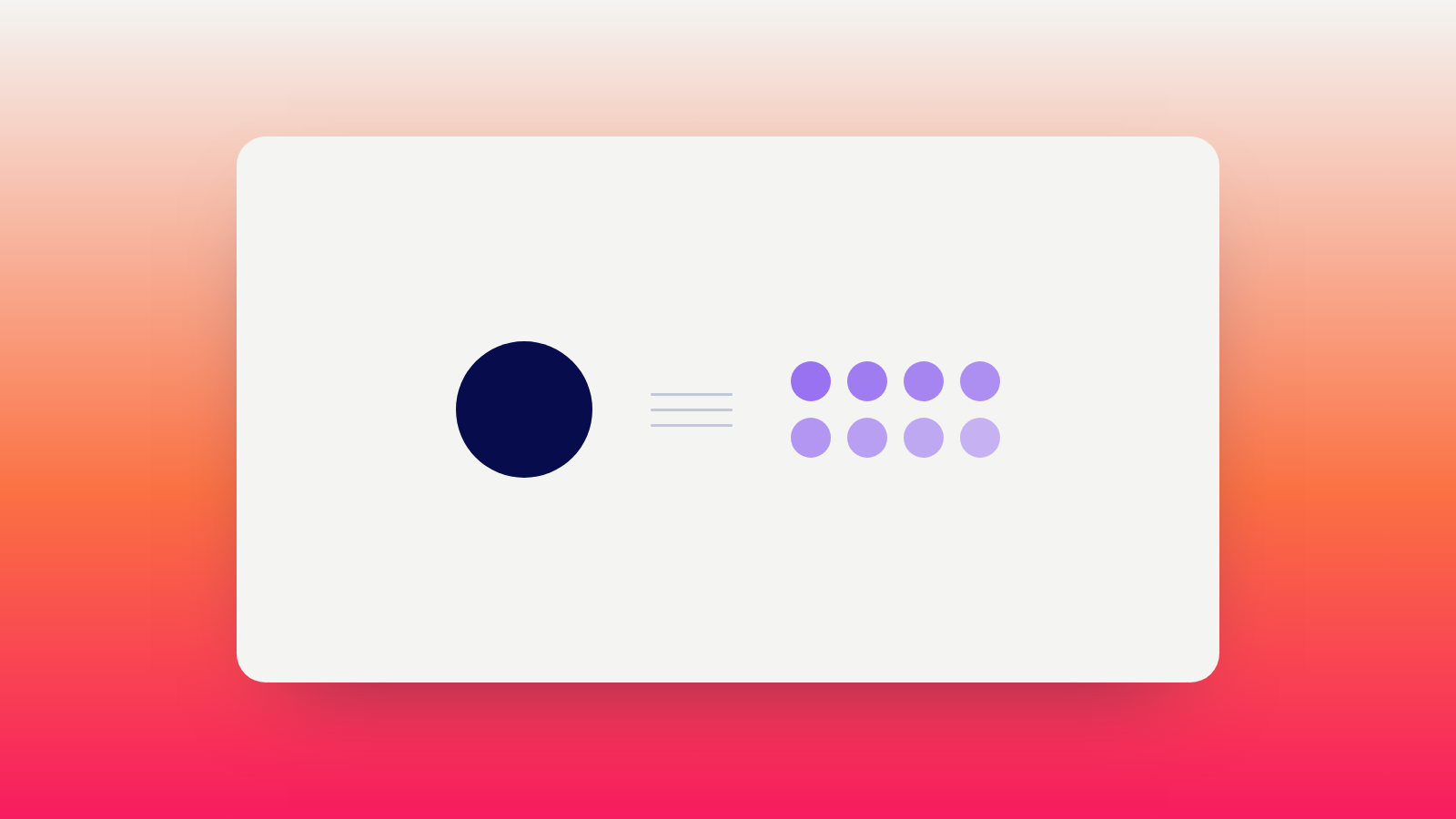
Abstract illustration of a single large circle fanning out into eight smaller ones, representing one group session becoming eight separate claims

Key takeaways

  • 90853 is billed per participant, so eight attendees means eight claims.
  • 90847 is family therapy with the patient present; 90846 is without.
  • Each participant needs documentation reflecting their own progress.
  • Identical notes across participants are a common audit finding.
  • Group members can have different payers and authorizations for one session.

Short answer: CPT 90853 covers group psychotherapy and is billed once per participant, per session, so a group of eight generates eight claims. 90847 is family therapy with the patient present; 90846 is family therapy without the patient present. The billing itself is straightforward. What isn't straightforward is getting your software to produce eight correct claims from one session without eight rounds of manual work.

Some of what follows comes from the codes themselves. The rest comes from somewhere we're lucky to sit: Oasys runs at the infrastructure layer of working practices, and we talk constantly with therapists and practice owners about how group billing actually behaves on a Tuesday afternoon. The coding rules are the easy part. What it takes to produce eight correct claims from one group session is the part nobody writes down.

The three codes

CPT 90853, Group psychotherapy

Group psychotherapy other than multiple-family group therapy. Covers the treatment of several patients in a single session, where the group dynamic is part of the therapeutic work.

The billing rule that matters most: 90853 is reported per participant. One 90-minute group with eight members is not one claim. It is eight claims, each under that individual client's name, insurance, and authorization.

No time threshold is built into the code the way it is for individual therapy, but payers vary in what they expect for session length and documentation, so check your specific contracts.

CPT 90847, Family psychotherapy, patient present

Family or couples therapy with the identified patient in the room. Typically documented around 50 minutes. Billed under the identified patient.

CPT 90846, Family psychotherapy, patient not present

The same work, without the identified patient, a session with parents, a spouse, or other family members about the patient's treatment. Still billed under the identified patient, even though they weren't there.

The distinction between 90847 and 90846 is presence, not participants. This is the most common mix-up, and it's a clean audit target because the note either documents the patient in the room or it doesn't.

What each note has to show

Group and family notes get scrutinized more than individual notes, because the billing generates multiple claims from one clinical event.

For 90853, each participant's note needs its own content. Not a copy of the group summary with a name swapped. Each note should document that individual's participation, their response to the group work, and progress against their treatment plan goals.

This is the single most common finding in group therapy audits: eight identical notes with different names at the top. It reads exactly like what it is.

For 90847 and 90846, document who was present, whose treatment plan the session serves, and how the family work connects to that plan.

The operational test your EHR either passes or fails

Here is a concrete way to evaluate any platform, and it takes about five minutes in a demo:

Run one group session with eight attendees. Count the clicks to produce eight correct claims.

Software built for solo caseloads makes you do the session eight times, or makes you create the group, then open each client individually to document and charge. Software built for group practices takes one session, one attendance roster, and fans out eight claims and eight note stubs.

The gap between those two designs, at a practice running four groups a week, is hours per week, permanently.

This connects to a broader pattern we hear from practice owners constantly: the operational cost of an EHR rarely shows up on the invoice. It shows up in staff hours. One practice told us 20 hours a week of their billing manager's time went into converting EHR data into a payroll ledger, because the software had no model for how the practice actually worked. Group billing is the same failure in miniature.

Common billing mistakes

Billing 90853 once for the whole group. It's per participant. This is the error that generates the largest recoupments, because it's usually systematic rather than occasional.

Using 90847 when the patient wasn't present. That's 90846. Presence is the deciding factor.

Identical documentation across participants. Each participant's note must reflect that participant.

Missing authorization per client. Every group member needs their own active authorization. One member's lapsed authorization doesn't stop the group, it just stops that claim, and often silently.

Forgetting that group members have different payers. Eight participants can mean five payers with five sets of rules. If your system can't hold per-client billing rules against a shared session, someone is reconciling it by hand.

Group billing gets harder as the practice grows

Practices tell us the same thing about most EHRs: they work until they don't.

"It works quite well for a solo provider, but then really when you start growing, that's when it falls apart."

For group billing specifically, the growth failure is about volume mechanics. A practice running one group a week can absorb manual claim entry. A practice running twelve groups a week across six clinicians cannot, and that's the point where practices start exporting into a second tool. One practice we spoke with does bulk billing through an outside platform in a manual process that takes four-plus hours every month. Another found that verification of benefits in their EHR was "barely functional," so staff check payer portals by hand instead.

None of this is exotic. It's just what happens when group workflows are added to a product designed around one clinician and one client.

What to ask before you commit

  1. From one group session, how many actions produce claims for all participants?
  2. Can each participant's note be documented individually from the group roster?
  3. Can the system hold different payers and different authorizations across one group?
  4. Does it flag a lapsed authorization before the session, not after the denial?
  5. Can a supervisor review group notes across participants without opening each chart?

How Oasys handles it

One group session, one attendance roster. Claims fan out per participant against each client's own payer and authorization. Each participant gets their own note, prompted against their own treatment plan goals rather than a shared template. Authorization gaps surface before the session rather than as a denial six weeks later.

Pricing is $80 per clinician per month on an annual contract, with no add-ons, group billing isn't a tier you upgrade into.

Frequently asked questions

What is CPT code 90853?

Group psychotherapy other than multiple-family group therapy. It is billed once per participant per session, so a group of eight generates eight separate claims.

How is group therapy billed?

Under 90853, per participant. Each group member's claim goes under their own name, insurance, and authorization, supported by an individualized progress note.

What is the difference between 90846 and 90847?

Both are family psychotherapy. 90847 is with the identified patient present; 90846 is without. Both are billed under the identified patient.

Do all group participants need their own note?

Yes. Each participant needs documentation reflecting their own participation and progress against their own treatment plan. Identical notes across participants are a frequent audit finding.

How long does a 90853 session need to be?

The code doesn't set a strict time threshold the way individual psychotherapy codes do, but payers vary in expectations. Check your individual contracts.

Can I bill 90853 and an individual session on the same day?

Often yes, but payer rules vary and some require modifiers or documentation of separate medical necessity. Verify per payer before making it routine.

Related articles

Abstract illustration of four separate dashboard tiles, each showing a different operating metric at a glance
Oasys8 min read

The Weekly KPIs a Group Therapy Practice Owner Should Actually Watch

A group therapy practice owner should watch four numbers every week: utilization (booked hours against available hours), no-show and cancellation rate, caseload per clinician…

Abstract illustration of a small cluster of bars growing steadily taller and more numerous, representing a practice scaling up its clinician count
Oasys7 min read

How to Grow a Group Therapy Practice From 5 to 25 Clinicians Without It Breaking

The practice does not break from headcount. It breaks from the workflows that were fine at 5 clinicians and were never redesigned for 15 or 25.

Abstract illustration of three stacked stages completing in sequence, the third highlighted as its own distinct step
Oasys7 min read

Credentialing vs. Payer Enrollment vs. Clearinghouse Enrollment: Why They're Not the Same

Credentialing, payer enrollment, and clearinghouse enrollment are three separate steps that happen in sequence, not one process with three names.

Abstract illustration of a review distribution splitting into two distinct camps
Oasys4 min read

TheraPlatform Reviews: What Therapists Actually Say

Reviews split cleanly on one line: how much of your practice happens on video. Above seventy percent virtual, the session tooling earns its place.

Abstract illustration of an arc gauge resting high but short of full
Oasys4 min read

TheraNest Reviews: What Therapists Actually Say

Active-client pricing makes TheraNest cheaper for variable caseloads. Reviews are solid on function, softer on polish, and mixed on migration.

Abstract illustration of sentiment divided into proportional bands, weighted toward the positive
Oasys4 min read

Sessions Health Reviews: What Therapists Actually Say

Reviewers consistently praise price, simplicity and support. The one consistent criticism is reporting, and whether that matters depends on your size.

Abstract illustration of opinion dots clustering tightly around one central strength
Oasys4 min read

Jane App Reviews: What Therapists Actually Say

Praise concentrates on scheduling and running a mixed clinic from one system. Criticism concentrates on mental health depth and treatment plans.

Abstract illustration of a circle divided cleanly in two, representing a single decision with two sides
Oasys5 min read

TheraPlatform vs SimplePractice: Which Suits Your Practice?

TheraPlatform was built around teletherapy rather than retrofitted for it. Whether that is worth it comes down to one number: your virtual share.

Abstract illustration of two stacks of differing height, representing options weighted differently
Oasys5 min read

TheraNest vs SimplePractice: Which Is Better for Your Practice?

TheraNest prices on active clients rather than seats, which suits fluctuating caseloads. Plus a migration warning worth reading before you commit.

Abstract illustration of two columns of bars compared side by side
Oasys5 min read

Sessions Health vs SimplePractice: A Practical Comparison

Sessions Health is the better value for small practices, with free admin seats and no feature gating. The trade-off is reporting depth.

Abstract illustration of two overlapping circles showing where two products share ground and where they differ
Oasys5 min read

Jane App vs SimplePractice: Which Fits a Therapy Practice?

Jane wins on scheduling and multi-disciplinary clinics. SimplePractice wins on therapy-specific depth. The treatment-plan gap decides most of it.

Abstract illustration of two panels meeting at a seam, one neutral and one in Oasys deep navy
Oasys8 min read

Oasys vs TherapyNotes: Which Is Better for a Group Practice?

TherapyNotes is genuinely well built. Here is where it stops fitting a growing group practice, and what the per-transaction fees really add up to.

Abstract illustration of two panels meeting at a seam, one neutral and one in Oasys purple
Oasys7 min read

Oasys vs SimplePractice: Which Is Better for a Group Practice?

A straight comparison for practices with five or more clinicians, covering supervision, permissions, payroll and what switching actually involves.

Abstract illustration of a review distribution skewed toward the positive end
Oasys6 min read

SimplePractice Reviews: What Practices Actually Say in 2026

SimplePractice is excellent for solo therapists and strains for group practices. What practices praise, what they criticise, and where the line falls.

Abstract illustration of two evenly weighted panels in pale sky and lavender, representing a neutral comparison
Oasys8 min read

SimplePractice vs TherapyNotes: An Honest Comparison for 2026

Two good products that break in the same place. An honest comparison of pricing, supervision and billing, with our own stake clearly labelled.

Abstract illustration of five options side by side with one lifted and filled in Oasys purple
Oasys9 min read

SimplePractice Alternatives for Group Practices

Why group practices outgrow SimplePractice, what the realistic alternatives are, and how to move eight years of records without breaking the practice.

Abstract illustration of a statement where many small repeating charges accumulate beneath a single subscription line
Oasys8 min read

What SimplePractice and TherapyNotes Actually Cost a Group Practice

The subscription is the smallest part of the bill. What group practices actually pay once per-claim fees, text charges and workarounds are counted.

Abstract illustration of a ranked set of bars with the top position highlighted in Oasys purple
Oasys10 min read

Best EHR for Group Therapy Practices (2026)

Group practices break in predictable places as they grow. A ranked guide organised around what fails at five, fifteen and thirty clinicians.

Abstract illustration of a comparison grid with one column resolved in Oasys purple
Oasys7 min read

Mental Health EHRs: The Complete Comparison Guide (2026)

There is no best mental health EHR, only a best one for your size. A guide organised by practice size, with five tests demos are not designed for.

Abstract illustration of requirements grouped into three tiers, the top tier marked as non-negotiable
Oasys7 min read

Mental Health EHR Requirements: What to Actually Demand

The requirements that actually matter, grouped by what breaks at five, fifteen and thirty clinicians, plus a ten-item checklist to run live in a demo.

Abstract illustration of a treatment goal with three measurable objectives progressing toward their target markers
Oasys8 min read

Mental Health Treatment Plan Examples

The four parts of a usable plan, worked examples for anxiety, depression, trauma and substance use, and the goal formula that makes progress notes write themselves.

Abstract illustration of a single large circle fanning out into eight smaller ones, representing one group session becoming eight separate claims
Oasys7 min read

Group Therapy Billing: CPT 90853, 90847, and 90846 Explained

CPT 90853, 90847 and 90846 explained, plus the five-minute test that shows whether your EHR can actually bill a group session without manual work.

Abstract illustration of a note divided into three stacked sections with the third highlighted
Oasys5 min read

DAP Notes: Format, Examples, and When to Use Them

Data, Assessment, Plan. A worked example, how DAP compares with SOAP and BIRP, and the mistakes that make notes fail during a payer audit.

Abstract illustration of a note divided into four stacked sections with the third highlighted
Oasys6 min read

SOAP Notes: Format, Examples, and How to Write Them Faster

The four sections, a worked example with a real assessment, and why notes take so long. Hint: it is almost never the template that slows you down.

Tate Psychotherapy × Oasys — customer success story
Oasys5 min read

How Tate Psychotherapy left SimplePractice without missing a session

How a solo NYC psychotherapy practice switched from SimplePractice with zero missed sessions, then put notes and billing on autopilot with Oasys.

SoCal Soul Family Therapy × Oasys — customer success story
Oasys5 min read

How SoCal Soul launched a fully equipped practice from day one

How a two-clinician startup launched with Oasys' Managed RCM handling all billing, and wearable health data built into the client record from day one.

Lowry Hill Psychotherapy × Oasys — customer success story
Oasys5 min read

How Lowry Hill got an EMR shaped around how its clinicians actually work

How an eclectic group practice moved off TheraNest, kept billing in-house on Oasys, and got custom workflows, AI documentation, and fast support.

Camino Nuevo × Oasys — customer success story: ~40% less documentation time
Oasys5 min read

How Camino Nuevo cut documentation time by ~40% with Oasys

How a school-based mental health program cut documentation time ~40%, saved clinicians 8–9 hours a week, and fully onboarded in under one week.

Therapist reviewing notes on a laptop at a clean desk in a calm, naturally lit office
Oasys5 min read

Is it actually safe to use AI for therapy notes?

AI therapy notes can be HIPAA compliant, but safety depends on the tool, not the category. Here are three facts to verify with any vendor.

A cluttered desk with open folders and scattered documents, reflecting the unexpected complexity of switching EHR systems
Oasys5 min read

What actually goes wrong when therapy practices switch EHRs

EHR migrations fail before the data moves. Here's what actually breaks — consent gates, lost calendars, flattened notes — and how to clear it.

Claim folders and reimbursement packets arranged in progressively taller stacks, representing growing billing complexity in a group therapy practice
Oasys5 min read

Own your brand vs. rent a network: the real economics

Therapy networks take 20–30% of billing revenue, per session, indefinitely. Here's how to decide when to rent a network and when to own your brand.
A calendar densely filled with appointments, representing the scheduling complexity of a growing group therapy practice
Oasys6 min read

The group-practice scaling wall: what breaks at 5, 15, and 30 clinicians

Solo-built EHRs break at predictable thresholds. Here's what fails at 5, 15, and 30 clinicians — and the architecture gaps behind it.

A clock face representing the unbillable hours therapists spend on manual documentation after sessions
Oasys5 min read

Documentation burden in behavioral health: the hidden cost of manual notes

Manual therapy notes cost clinicians 6–8 unbillable hours every week. Here's what documentation burden actually costs your practice.